We're back yet again to bring our readers some of the most informative gaming guides out there. This week's article will focus on the well-known and loved game RuneScape 3. While many of our readers are more than familiar with the game, we're also aware that this game has an ever-growing player base, so we want to welcome those new to the game and walk them through some of the most popular aspects in this RS3 guide for beginners. So, let's delay no further and dive straight into it!
RS3 RuneScape Guide: Gielinor, Here We Come!
Before you even set foot into the game's world, you'll need to create your character. Don't stress too much about this step; you can later alter appearances and even gender by speaking with the Make-Over Mage. Once you're satisfied with your new in-game self, it's time to get started.
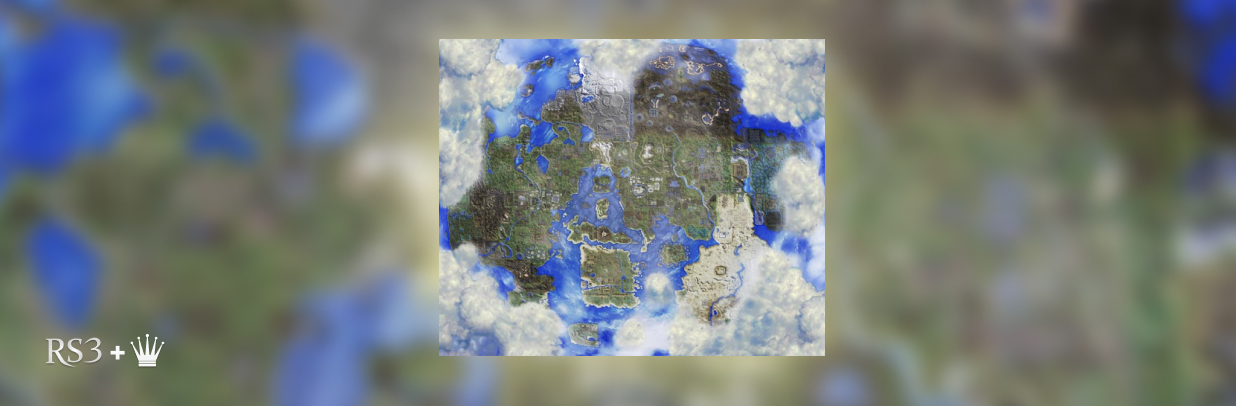
The world of RS3 is named 'Gielinor,' consisting of several smaller islands, cities, and towns. When you begin your journey into RuneScape, you'll find yourself being greeted by Reginald on Tutorial Island. You should easily locate him, as an update in recent years will see him waving to you to attract attention. It is here you will have the basics and mechanics of the game explained to you, even down to camera and player movement. And once you've got your bearings, let’s take the next step in this RuneScape guide; it’s time to step into the game itself.
Getting Around With Our RuneScape Guide
Once you're in the world of Gielinor and get things underway, you'll probably want to begin exploring to experience all the excitement that can be found in-game. So, let's touch on a few things you'll need to know to do so well.
The Mini Map
This can be found at the top right of your screen, showing a bird's eye view of the entirety of the in-game world.
World Map
You can access the world map by hitting the 'World Map' button within the Mini Map. This will provide you with a bigger and more in-depth view of Gielinor, allowing you to get a good look at your surroundings. As you progress into partaking in quests, skilling, and more, you will find it helpful to check your map often, as the map often contains markers indicating where your next adventure will take place. Try to take some time to get your head around the vast world of Gielinor and do some exploring throughout the many cities.
Home Teleport
The next thing we'll touch on in our RuneScape guide is the home teleport. Making use of this will transport you to the lodestone of the cities and places you have visited and activated. A lodestone is a circular stone plinth that can be found in most major cities; before you get too into the game, it's important to note you can not access the World Map nor Home Teleport when in combat.
The Path System
As there are many aspects of RuneScape, as a new player, you may find yourself overwhelmed with options. So, if you ever find yourself stuck in a rut, turn to the Path System. Quests, and skills (both combat and non-combat) are staples of the game, and they are abundant; giving players, at times, too much content to comprehend. So, if you can't decide where to turn next, the use of the Path System will allow you to select questing, combat skilling, and non-combat skilling. In doing so, you will be shown the closest activities to your current stance and in relation to your choice.
A RuneScape Guide to Understanding Skills
One of the cornerstones of the game are skills, in which players train abilities that typically have a max capacity of 99 levels (though some reach 120). There are 29 overall in the game, though only members can access all of them, with free-to-play users accessing 17 entirely and being able to reach level 5 in each of the remaining 12. Each skill can be built up through numerous different activities related to the skill. Your stats are viewable in the display menu with an icon representing the skill in a box, accompanied by a number, such as 2/99. With the first number representing your current level and the second the max.
Free-to-Play Skills
Here, in our RuneScape guide, we have listed the skills, as well as the categories they fall into.
- Attack - Combat
- Strength - Combat
- Defence - Combat
- Ranged - Combat
- Prayer - Combat
- Magic - Combat
- Constitution - Combat
- Crafting - Artisan
- Mining - Gathering
- Smithing - Artisan
- Fishing - Gathering
- Cooking - Artisan
- Firemaking - Artisan
- Woodcutting - Gathering
- Runecrafting - Artisan
- Dungeoneering - Support
- Fletching - Artisan
Members Skills
Of the 12 Member skills that F2P users can briefly access, both Archeology and Necromancy can be taken to an impressive level 20 as opposed to 5 like the remaining 10 skills for Members.
- Agility - Support
- Herblore - Artisan
- Thieving - Support
- Slayer - Support
- Farming - Gathering
- Construction - Combat
- Hunter - Gathering
- Summoning - Combat
- Divination - Gathering
- Invention - Elite
- Archeology - Gathering
- Necromancy - Combat
As you can see from the lists alone, there is a lot of content to immerse yourself in, and this is before we dive into quests! Invention, as you can see, stands out from the rest, as it does not fit into the four regular categories of other skills. Instead, this skill is somewhat of a standalone, requiring players to have two or more different skills at a certain level before unlocking the ability to train.

When the time comes to begin your skilling journey, don't get overwhelmed by the sheer amount of content you can take part in. RuneScape 3 is an ever-growing game with new quests, skills, areas, and other exciting aspects regularly added and updated. If you go down the RuneScape rabbit hole, there is almost literally a lifetime of content! Next, in our RS3 beginner's guide, we will touch on quests, another important and, at times, overwhelming aspect of the game.
Get to Know Abilities with Our RuneScape Guide
Abilities are combat commands for several of the skills(Necromancy, Attack, Constitution, Magic, Defence, Ranged, and Strength), with each of the skills having a menu of abilities that can be found in the Powers menu.
As abilities vary so much in terms of their capabilities and purpose, we'll provide you with a more shallow view of them in this RuneScape guide rather than a deep dive into all of the meaning behind them. To summarize, abilities can be used to provide extra damage, increase damage defense, heal a player, and much more. However, they also cost "Adrenaline" to use, with the more forceful attacks costing more of your energy.
Abilities fall into three categories: Basic, Threshold, and Ultimate. You can also incorporate "Auto-attacks" here, and we'll explain what these mean below.
Auto-Attacks
Dish out the damage of weapons without the special effects, and these attacks typically bring up your Adrenaline between 1-3%.
Basic Abilities
Using these abilities will gain you roughly 8% Adrenaline. They also commonly have an increased damage, a special effect, or, if you're lucky, both.
Threshold Abilities
To use Threshold Abilities, you'll need at least 50% Adrenaline, which will be depleted by 15% upon usage. These movements often inflict more damage than basics and have stronger effects.
Ultimate Abilities
To use these Abilities, your Adrenaline meter must be at 100%, and it will be wiped to 0% upon use. However, it's well worth it, given the damage inflicted and the potential special effects these Abilities carry.
All Abilities come with a Cooldown period that is unique to them. This period will activate once the movement is carried out, and you will get a Cooldown timer. This means you'll be unable to use these Abilities again until the timer has ended.
A RuneScape Guide in The Basics of Questing
If you found 29 skills to be a lot, buckle up because the game also offers an astounding 258 quests! Only 41 of these are free-to-play, with the remaining 217 granting only access to Members.
By completing quests in-game, users will gain "Quest Points," which are used as requirements for entering some other quests. But that's not all that's to be gained; quests commonly carry a "theme," meaning you will level certain skills depending on the skills associated with tasks in quests.

It's also common practice that quests will require players to have certain items skill levelings and have completed certain other quests prior to entering into them. However, not all quests share this practice, with some that are the beginning stages of a skilling journey requiring nothing to begin them.
For all of your questing efforts, once you have completed all of the quests available, you can acquire the "Quest Cape," which can be purchased for 99,000 coins from the Wise Old Man. However, if the game incorporates a new quest, this cape will be unequipped until the completion of this new quest.
Quests in RuneScape 3 are groups of tasks that are interrelated; they often possess their own storyline, allowing users to not only better their in-game knowledge and skill but to learn the lore of the game and to enjoy an immersive story as they go. You can find a complete library of the quests here.
In RuneScape, quests are categorized, making the sheer amount of them a little more digestible. Next, in our RS3 beginner's guide, we'll inform you of these categories so you can enter the game with no confusion.
Quest Series
If a quest is part of a series, it will share a common plot line with others in that series. Some are two quests long, while others, like the Gnome quest series, have six quests, and then the Desert series has an impressive ten quests. In these cases, the early quests in the series typically become "quest requirements" for the next step in the story, meaning you must complete the previous quest before you can dive into the next story.
Subquests
Similarly to a quest series, subquests are a part of another quest. However, in this case, when you enter, for instance, the Recipe for Disaster quest, you will encounter ten subquests within. Completing these subquests will provide additional Quest Points and rewards once the entirety of the quest has been completed.
Repeatable Quests
Next on the list in our RuneScape guide are Repeatable quests are those that players can return to time and time again. These quests will typically contain some "choice-based" scenarios, so going back for a second try will allow you to explore different opportunities and areas of the quest. When repeating quests, you may not always receive the initial rewards, but you could have the opportunity to locate some Easter egg rewards.
Bottle Quests
Quests in this fashion are created using minimal new assets and typically have their focus turned to world-building and characterization. They can still be vastly different from one another, however, as the tone of the quests can go from light-hearted storylines to darker corners of the game.
Miniquests
These are smaller segments of a story or skill content that do not require completion to acquire the Quest Cape but still provide players with exciting parts of certain stories. Typically, these mini-quests will be a part of a larger story or a quest series, but there are, at times, standalone stories; as of now, the game has three mini-quest series. Now that we’ve covered the questing aspect, let’s move on to the next topic in our RuneScape guide, items.
A RuneScape Guide to Items, Weapons, Wardrobe, and More
Along with questing and skills, the game comes with a ton of weapons, items, wearable items, and, in some cases, even pets!
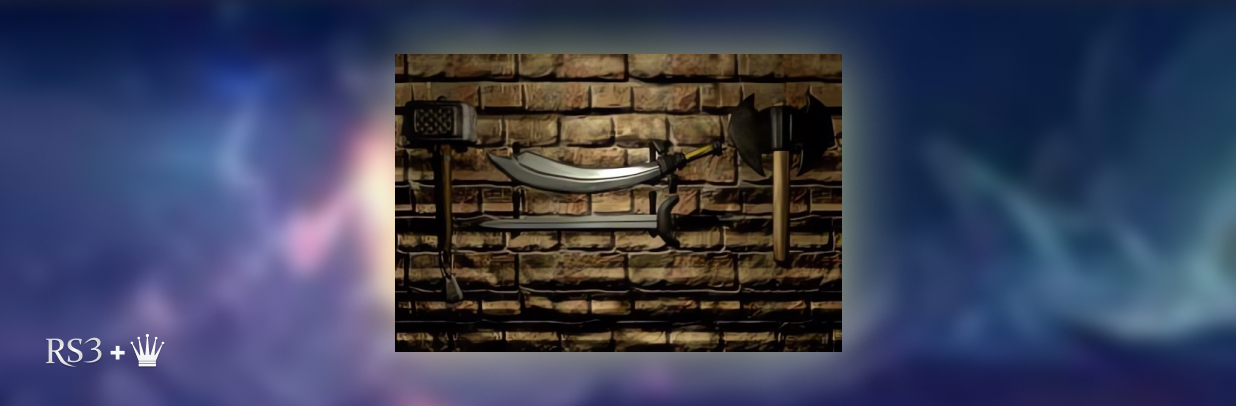
Due to the sheer amount of items alone, we won't dive too far into the workings and such of everything, but we'll ensure you leave our beginner's guide for RS3 with a great understanding of the game. So, let's get into it!
RuneScape 3 Items
Items are the next topic for our RS3 beginner's guide. They can be differentiated in RuneScape by the small graphic that represents them, so you'll no doubt need some time to wrap your head around the sheer amount of them, as there are over 100 categories, let alone items.
As well as items falling into many different categories within the game, some are also skill-specific. You'll find that the weight of items in-game is also considered, so don't stock your inventory too much, as the game includes the real-life aspect of hindering your speed depending on the weight of what you carry. Below, we have listed the different categories items can fall into:
- Tradable/Untradable - typically, players can trade items amongst themselves, though some types of holiday, quest-related, and miscellaneous items can't be traded. Items that are player-to-player tradable can also be traded on the Grand Exchange, allowing players to build their gold stocks, too.
- Equippable/Non-Equippable - There are armors that can be worn, as well as weapons that can be "equipped" to provide additional effects to users when in battle or conducting quests.
- Stackable - Within your inventory, items take up their own inventory slot, whereas stackable items will "stack" on one another in one inventory slot to allow you to carry several without lowering your availability.
RuneScape 3 Weapons
Next, in our RuneScape guide, we'll talk about weapons. Weapons in RS3 are wieldable items that can be used to inflict damage on other players in battle or against creatures you face during conflict. There are four main categories for all weapons, those being Necromancy, Ranged, Melee, and Magic. Below, we'll give a brief description of each so you can grasp a better understanding of their purpose:
Melee
Because of the lack of ammunition needed to make use of these weapons, they're typically some of the most popular among players. There are ten categories these weapons fall into, which we have listed below:
- Daggers
- Shortswords/Longsword/Two-Handed Swords
- Scimitar
- Maces
- Battleaxe
- Warhammer
- Spears
- Claws
- Halberds
- Defenders
Ranged
These are weapons that can be used from a distance and require ammunition; typical Ranged weapons fall into the following categories:
- Bows
- Crossbows
- Throwing Weapons
For more on Ranged weapons, check here.
Magic Weapons
These weapons typically fall into two categories: staves and wands, though there are others. Staves being the two-handed weapon, and wands are the main-hand with often higher attack speeds. Below, we have listed all Magic weapon types:
- Staves
- Books
- Orbs
- Wands
Necromancy
Necromancy weapons are commonly used in close quarters as they have a short attack range; check out the types below:
- Siphons
- Conduits

RuneScape 3 Armor
Next on our RS3 beginner's guide is Armor, and similarly to weapons, Armor in RS3 falls into the same four categories of combat types. Armor is an "equippable item" that players wear to earn the likes of defensive bonuses in combat, with each type offering different purposes. We'll, of course, provide a breakdown on these below:
Melee Armor
These armors are typically made from metal, providing the best defense against Ranged and being weak to Magic. And, once you've mastered the Smithing skill, you'll likely be making some of your own Melee armor.
Ranged Armor
These armors are often crafted from animal hides, most commonly Dragonhide. These armors are often good defense against Magic but fall short when it comes to Melee. For these armors, you'll be able to create many of your own once your Crafting skills have been honed.
Magic Armor
Unlike the aforementioned armors, Magic Armor is typically depicted as robes or something similar. With these armors, you'll have good protection against Melee, but Ranged will be your Achilles heel. You can create your own of these armors once you grow your Crafting and Runecrafting skills.
Necromancy Armor
Just like Magic armor, Necromancy armor has a more unusual appearance, being shown as robes rather than breastplates, etc. The beauty of this Armor is that it protects pretty well against all combat styles, and you'll be able to create your own with ensouled materials and a few necromantic rituals!
All armors in-game are broken down into Tank, Power, Hybrid, All, and Hybrid power. You can read more about that here.
RuneScape 3 Pets
Next up on our discussion list for our RuneScape guide are pets! In-game, there are standard pets, which are non-combat NPCs that players can unlock with a certain level in Summoning. You can also acquire pets in drops when slaying certain monsters, though doing so is rare. However you happen to acquire your pet, they will become your loyal companion as you navigate the excitement in Gielinor.
Players can also randomly obtain Skilling pets from drops, as well as the chance to grow their level in the particular skill associated with said skill. As of now, there are a total of 29 Skilling pets, one for every skill, and when you examine your pet, you'll be able to see your leveling in the skill associated with them.
However you acquire a pet, they are sure to be a fun accessory and companion on your adventures through Gielinor.
RuneScape Guide: FAQ
Despite the fact we've taken a good look into many areas of the game in this RuneScape RS3 beginners guide, we're sure there will be some questions left unanswered. So, to ensure there is no confusion for our readers, below we've provided a list of the most frequently asked questions! Take a look for yourself:
Where Do I Go When I Start RuneScape 3?
The choice is entirely yours. Our philosophy is, when in doubt, pull that compass out! You'll be able to access the closest quests, skilling activities, and more to take you on a personalized journey. Or, if you'd rather bounce around the map, why not start a quest series that has suitable beginner requirements and visit the sites?
Which Quests Should I Do As A Beginner?
Once you've gotten to grips with the mechanics of the game, which, thanks to this RuneScape guide, we’re sure won't take long, and want to start your questing adventures, we believe a great place to start is with Wolf Whistle or The Blood Pact. Both of these require little to start and should ease you into the questing scene.
How Many Hours Will It Take Me To Finish RS3?
If you were to break it all down, you'd be looking at over 1,500 hours, and that's just for the main story, and if you're fast! With completionist status, you're looking at around nearly 5,000 hours. So it's safe to say you won't be running out of content anytime soon!
The End of The Road for This RuneScape Guide!
Thank you to our readers for choosing our RS3 beginner's guide to walk them through this exciting new gameplay experience. We hope that you're now well on your way to being a RuneScape champion! If you've gotten yourself acquainted with the game and want some help navigating some of the more in-depth stuff, take a look at our blogs here. And if you're in need of currency to fund your journey, try out our gold-buying services; our rates are second to none. We will be back at the same time next week to bring you even more in regards to the gaming world, so don't miss out; we'll see you then!